
Note: I was asked to write this op-ed piece five months ago; however, after submitting it to the requesting editor, I heard neither hee nor haw. And so, I’m publishing it myself here. Maybe late, but always relevant. In joy, kn
* * *
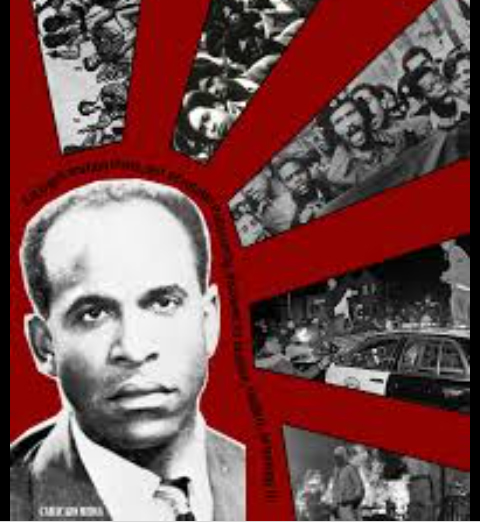
I don’t take lightly that I’ve been reviewing House Bill 187, the “Equality in Education” bill, while also reading excerpts from Frantz Fanon’s 1961 The Wretched of the Earth. “Decolonization is always a violent event,” he writes, recalling the Algerian War of Independence. “At whatever level we study it—” he says, “individual encounters, a change of name for a sports club, the guest list at a cocktail party, members of a police force or the board of directors of a state or private bank—decolonization is quite simply the substitution of one ‘species’ of mankind by another.”
I am reading Fanon’s work with my North Carolina A&T State University students, with whom I have also read Zora Neale Hurston’s “How It Feels to Be Colored Me” (1928) and Langston Hughes’ “The Negro Artist and the Racial Mountain” (1926). Excerpts from Malcolm X’s autobiography is our next assigned reading. From all these texts, along with their lived experiences, my majority Black students have concluded what HB 187 says K-12 public schools should not “promote”: that race matters in a capitalistic United States whose wealth was achieved after Europeans stole the land from the Indigenous, occupied it and forced enslaved Afrikans to toil it, then hoarded it by creating codes and laws sanctioning the government, police, and white citizens to lynch, segregate, marginalize, police, and incarcerate Black and brown folks whose unconscious complicity in their continued oppression rests in the institutions (education, religion, law, media, medicine) and constructions (race & gender) that clandestinely garner their consent and/or obedience.

Race matters, said Cornel West, whose 1993 text of the same name analyzes America’s ongoing racial debates—which were just as prevalent 25 years ago as they are now in a 21st century where politicians are working to throwback Black and brown, queer and female into an American dystopia. Race matters, #blacklivesmatter, said Patrisse Cullors, Alicia Garza, and Opal Tometi, who began the 2013 movement to protect Black, brown, and queered bodies from state-sanctioned violence. However, according to House Bill 187, which includes 13 concepts—perhaps symbolic of the 13 confederate states or of the 13th amendment which substitutes mass incarceration for slavery—race (nor sex) matter at all. Simply, HB 187 forces K-12 teachers into a colorblind curriculum and/or practice that secures white domination and privilege. In other words, if the “Equality in Education” bill passes, it ensures the academy remains a state-sanctioned educational institution through which the dominating group (white men) maintains their power over minoritized populations.
And here’s the rub: Each of the concepts listed in HB 187 absolutely should NOT be promoted in K-12 classrooms nor anywhere else in a country claiming to be democratic. However, the listed concepts are like gaslights triggering one to question reality, truth, personal experience, gut feeling, and knowledge—particularly historical knowledge regarding America’s constitution. The bill’s concepts predispose teachers into questioning their agency, their rights, and their freedom—so much so, that instead of braving class discussions grounded in critical race theory—HB 187, like Derek Chauvin, kneels on teachers’ necks until they, we, can’t breathe. Wrestling to stay inside the parameters of HB 187, therefore, most likely will prevent teachers from engaging and creating race-based curriculum at all. And that’s the government’s intent, right?
To cancel race.
To kill wokeness.
To whitewash and condition one’s conditioning until one doesn’t know one’s name.
According to the “Equality in Education” bill, teachers should not affirm that “one race or sex is inherently superior to another race or sex.” But anyone living consciously in the United States of America knows, has witnessed, and/or feels that white men are systematically superior to women and Black folk. However, cancelling race matters is easier and safer than historicizing, explicating, and troubling it for student learners of a call out generation who is unafraid to hold accountable the people and systems promoting racist, sexist, ageist, ableist agendas. The classroom isn’t a safe space nor a brave space if HB 187 anchors its curriculum; instead, it’s a dead space (of white noise).
“The colonist derives his validity, i.e., his wealth, from the colonial system,” says Fanon. It’s the same colonial system that convinces the Negro middle class to conceive white as “a symbol of all the virtues,” writes Hughes—the same system, says Hurston, that when “thrown against [its] sharp white background,” she feels most colored: “a dark rock surged upon.” Race matters, and it has mattered long before folks started theorizing about it. However, Bill 187 acts as liquid Wite-Out, spread over America’s atrocities until history looks like a redacted text; it, too, in its correction tape feature, muzzles folks, prohibiting them from sharing their lived experiences—all of which have been affected by race. A whiting out until all that’s left is whiteness—a blank text on which Republicans and other conservatives compose their own raceless narratives.
Banning classroom discussions on race won’t foster a United States of America; it won’t unburden white folks from their responsibility toward the liberation of Black and brown people; it won’t amend America’s murderous history; and it surely won’t cultivate equality. Instead, taming teachers’ tongues through legislated bills that propose race doesn’t matter erases the lived experiences of Black and brown people and holds them solely accountable for societal ills (thus affirming the racism (and sexism) inherent in a meritocracy that only merits unencumbered, privileged white folks).
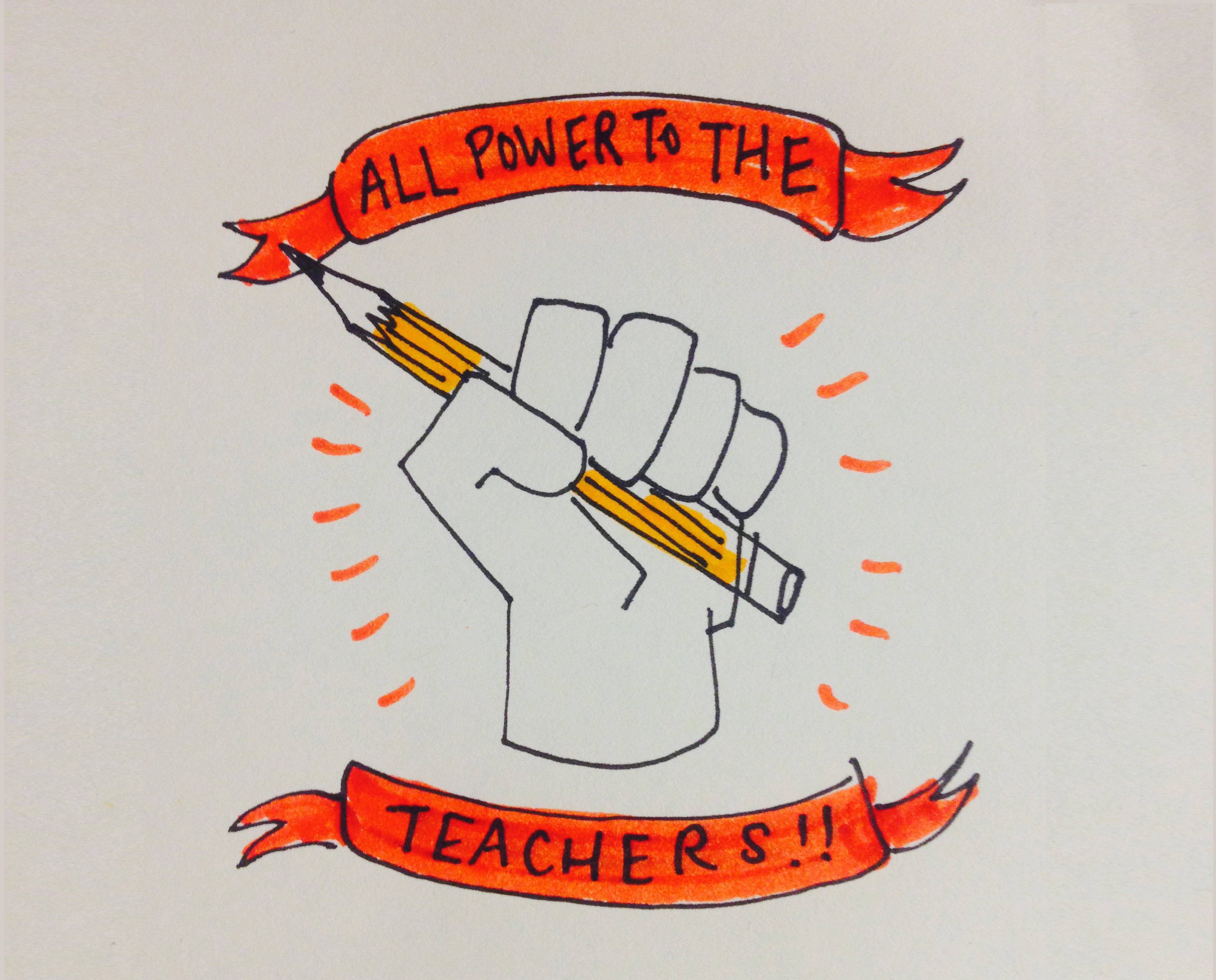
If teachers exist to change the world one student at a time, then we must not be afraid to give students the tools with which to sharpen their oyster knives, to build their temples for tomorrow, and to change the world’s order.
 Dr. Kendra N. Bryant Aya | s/her
Kendra!!! You are a STELLAR writer!! I can’t wait for your glow-up! Dang! I hope they get back to you. I’m glad you self-published.
LikeLike
Thank you, Kia. Write on!
LikeLike
Words from a parasitic blackkk westerner, writing about words written by another parasite, the crackkker-adjacent frantz fanon.
You can’t be racist to a nigger – one of the world’s most privileged classes, like the crackkker feminist.
LikeLike
Lunatic.
My god this women is the very definition of racist.
LikeLike